Leaving hospital after an operation is a relief, but for many families in Dubai it is also the moment the questions start. Who changes the dressing? How much movement is too much? What if something looks wrong at 10 pm? Recovering in your own home can be more comfortable and less stressful, as long as you have a clear plan and trained help close by.
This guide walks through what to organise before and after you come home, what a home nurse and physiotherapist can do, and the warning signs that always need prompt medical attention.
Why Recover at Home After Surgery?
Many people heal better in familiar surroundings. You sleep in your own bed, eat your own food and have family nearby. Home care also helps you avoid repeated travel through Dubai traffic and the heat while you are in pain or unsteady on your feet.
It is not right for everyone, though. Your surgeon decides when you are safe to leave hospital, and your discharge instructions are always the first rule to follow. Home care works alongside those instructions, not instead of them.
Before You Leave Hospital: A Practical Checklist
A little preparation makes the first week far easier. Ask your hospital team for the following in writing:
- Discharge summary: what was done, and any follow-up appointments.
- Wound care instructions: when to change dressings, when the area can get wet, and when stitches or staples come out.
- Activity limits: lifting, driving, stairs, and when you may return to work.
- Medicine schedule: what to take, when, and what to avoid.
- Warning signs: which symptoms mean you should call the surgeon or go to the emergency department.
Set Up Your Home
- Clear walkways of rugs, cables and clutter to reduce the risk of falls.
- Place frequently used items (water, phone, tissues, medicines) within easy reach of your bed or chair.
- Consider a shower chair or non-slip mat in the bathroom.
- Keep the home comfortably cool; hot, dry air indoors can leave you drained and dehydrated.
- Write the surgeon’s number and your family contacts on a sheet near the phone.
What a Home Nurse Can Do
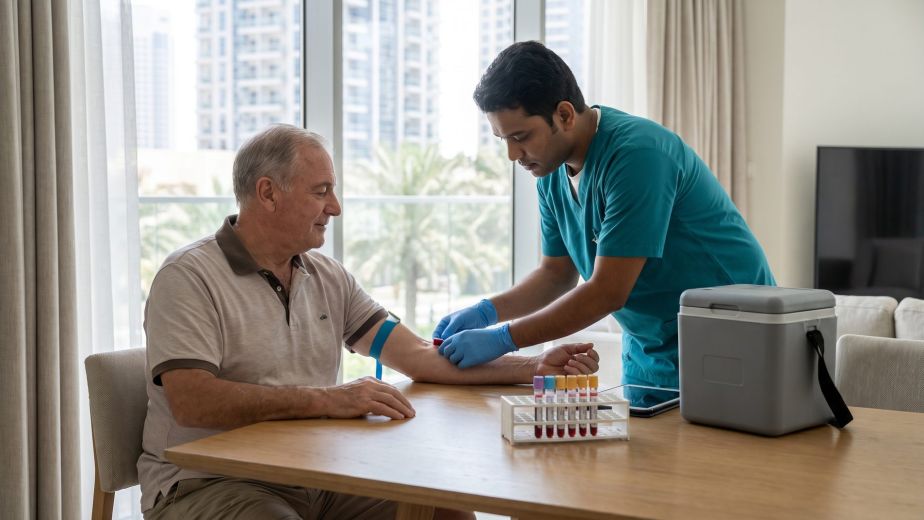
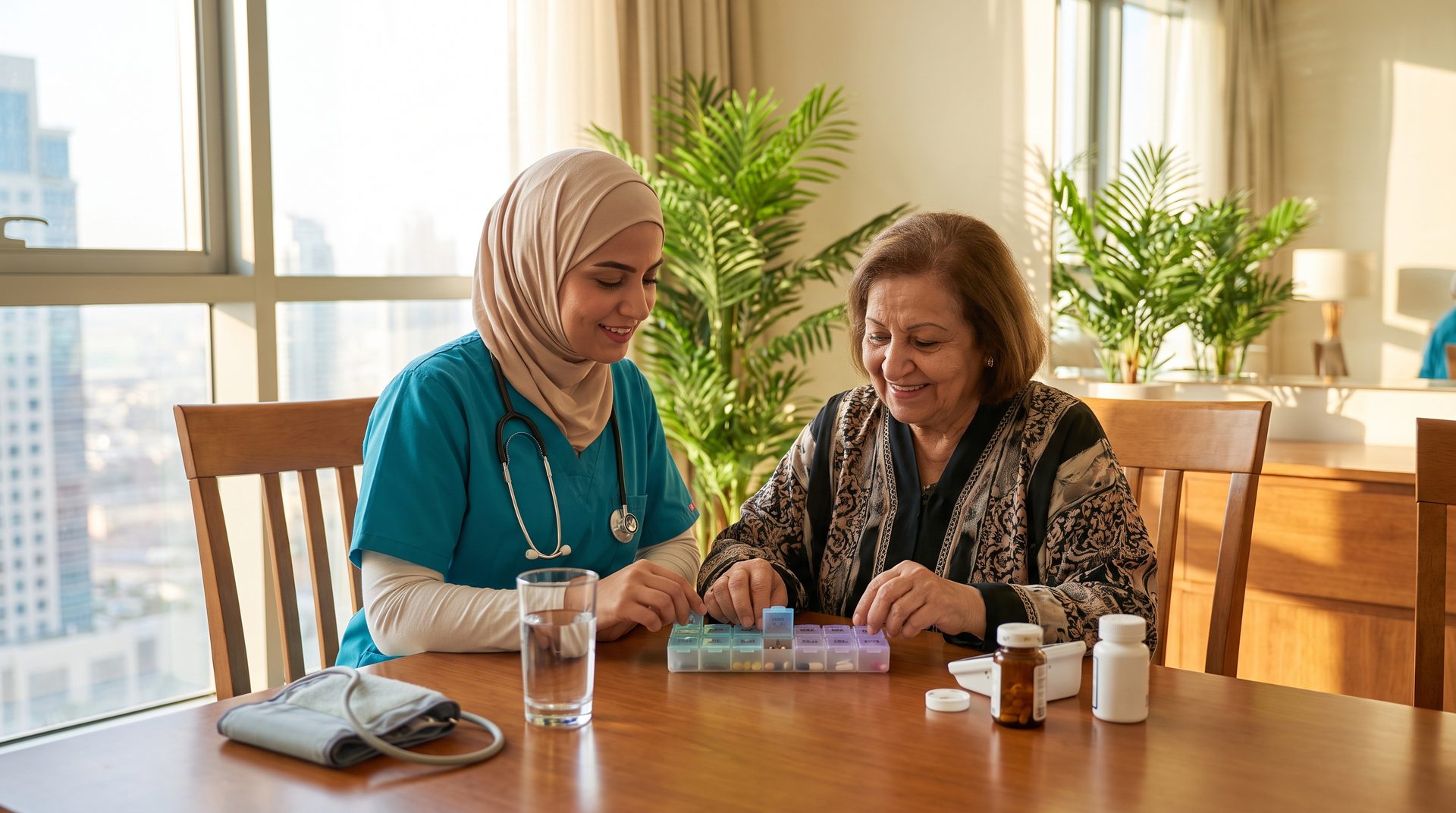
A licensed nurse visiting your home can take over many of the tasks families worry about most. Depending on your doctor’s instructions, this may include:
- Cleaning wounds and changing dressings using sterile technique.
- Checking for redness, swelling, discharge or other changes at the surgical site.
- Monitoring blood pressure, pulse, temperature and oxygen levels.
- Helping you keep to your medicine timetable and teaching family members how to assist.
- Giving injections or drips ordered by your doctor.
- Letting your treating doctor know if something does not look right.
You can learn more about our nurse at home service, which is delivered by DHA-licensed nurses across Dubai.
Physiotherapy: Moving Safely, Not Too Soon or Too Late
Gentle, guided movement is a normal part of recovery after many operations. It helps keep joints from stiffening, supports circulation and rebuilds strength gradually. The key word is guided. Doing too much can strain the surgical area, while doing too little can slow your progress.
A physiotherapist visiting your home can:
- Assess how you move in your real environment, including your stairs, bed height and bathroom.
- Teach safe ways to get in and out of bed, stand up and walk with or without an aid.
- Build a graded exercise plan that respects your surgeon’s limits.
- Show breathing and positioning techniques where relevant.
- Adjust the programme as you improve.
This is especially useful after orthopaedic procedures such as knee, hip or shoulder surgery, but many people benefit after abdominal or spinal surgery too. See our home physiotherapy service for details.
Everyday Recovery Habits That Help
Hydration and Nutrition
Dubai’s climate makes it easy to under-drink, particularly if you are less active and not thirsty. Sip fluids regularly unless your doctor has limited them. Eat regular meals with protein, fruit and vegetables, and follow any diet instructions from your surgical team.
Rest and Sleep
Healing takes energy. Plan short rests through the day and keep a regular sleep routine. Ask your doctor about comfortable sleeping positions for your type of surgery.
Pain Control
Take pain relief exactly as your doctor has instructed. Do not add or change medicines on your own, and ask a clinician if your pain is getting worse rather than better.
Walking and Circulation
Unless you have been told otherwise, short, frequent walks around the home are commonly encouraged. Your doctor or physiotherapist will tell you what is appropriate for you.
Emotional Wellbeing
Feeling tired, low or frustrated is common during recovery. Keep in touch with friends and family, and tell your doctor if low mood persists.
Warning Signs: When to Get Help Quickly
Contact your surgeon or treating doctor promptly if you notice:
- Increasing redness, warmth, swelling or pus at the wound.
- Fever or chills.
- Pain that is getting worse or is not controlled by the plan your doctor gave you.
- Persistent vomiting or being unable to drink.
- One leg becoming swollen, tender or painful.
- Wound edges opening.
For emergencies such as chest pain, severe shortness of breath, heavy bleeding or sudden confusion, call the ambulance on 998 straight away. A home visit is not a replacement for emergency care.
When a Doctor Visit at Home Makes Sense
If you are unsure whether a symptom is normal, a doctor at home visit can assess you without a trip to a clinic. The doctor can examine you, review your discharge plan and advise whether you need to go back to your surgeon or hospital. Our team can coordinate with your treating hospital so that your care stays consistent.
How CareFirst Supports Your Recovery
CareFirst Home Health Care Center has served families in Dubai since 2005, with over 300 DHA-licensed staff. Our nurses, physiotherapists and doctors can build a visit schedule around your discharge plan, so you are not managing everything alone. If you are not sure which service you need, contact us and we will help you work it out.
Frequently Asked Questions
How soon after surgery can home nursing start?
Often from the day you are discharged, once your hospital has given you your discharge instructions. It helps to arrange the first visit before you leave hospital.
Can a home nurse change my surgical dressing?
Yes. Licensed nurses can carry out wound care and dressing changes in line with your surgeon’s instructions and will tell your doctor about any concerns.
Is home physiotherapy safe straight after an operation?
It can be, when the programme is based on your surgeon’s guidance and your physiotherapist assesses you first. Never start exercises that your surgical team has not approved.
What should I do if I notice signs of infection?
Contact your surgeon or treating doctor promptly. If symptoms are severe or you feel very unwell, call 998 or go to the nearest emergency department.
Do I still need follow-up appointments with my surgeon?
Yes. Home care supports your recovery between appointments; it does not replace them.
Book Home Recovery Support in Dubai
Coming home from hospital soon, or already there and feeling unsure? Call or WhatsApp our team on +971 58 947 4302 to arrange a nurse, physiotherapist or doctor visit at your door.
This article is for general information only and is not a substitute for professional medical advice. Always consult a licensed physician.