Every year on 14 November, the world marks World Diabetes Day — and the theme chosen by the International Diabetes Federation and the World Health Organization for 2026–27 is “Early action on diabetes.” It is a message that could not be more relevant to families in Dubai. Diabetes is one of the most common chronic conditions in the UAE, yet it often develops silently for years before it is diagnosed. The earlier it is found, the easier it is to manage — and the more complications can be avoided.
In this guide, we explain why diabetes awareness matters so much in the UAE, the early signs to watch for, which blood tests catch the condition early, and how home healthcare makes screening and ongoing diabetes care far more convenient for busy families and older residents alike.
Why diabetes deserves your attention in the UAE
According to the International Diabetes Federation’s Diabetes Atlas, roughly one in five adults in the UAE is living with diabetes — one of the higher rates in the world. Just as concerning, the IDF estimates that a large share of people with diabetes in the country do not yet know they have it. That means many residents are going about their daily lives while elevated blood sugar quietly affects their blood vessels, kidneys, eyes and nerves.
Several factors contribute to the high rates seen across the Emirates:
- Lifestyle patterns: long working hours, desk-based jobs and car-centred routines mean many residents move less than they should.
- Diet: frequent dining out and delivery meals can make it easy to consume more sugar and refined carbohydrates than intended.
- Heat: for much of the year, Dubai’s climate discourages outdoor activity, which makes the cooler months from November to March especially valuable for building active habits.
- Family history: type 2 diabetes runs strongly in families, so relatives of people with diabetes benefit from earlier and more regular screening.
The good news: type 2 diabetes and prediabetes respond very well to early action. Identifying raised blood sugar early — often while it is still in the prediabetes range — gives you a genuine window to change course through diet, activity and medical guidance.
Early signs you should never ignore
Diabetes can be almost symptom-free in its early stages, which is exactly why screening matters. Still, there are warning signs worth acting on promptly:
- Feeling unusually thirsty, even in air-conditioned environments
- Needing to urinate more often, especially at night
- Persistent tiredness or low energy that rest doesn’t fix
- Blurred vision that comes and goes
- Slow-healing cuts, frequent skin infections or gum problems
- Unexplained weight loss, or tingling and numbness in the hands or feet
If you or a family member notices any of these — or if you simply have risk factors such as being over 40, carrying extra weight around the waist, having had gestational diabetes, or having a parent or sibling with diabetes — a simple blood test will give you a clear answer.
The blood tests that catch diabetes early
Diabetes screening is straightforward and does not require a hospital visit. The key tests include:
- HbA1c: reflects your average blood sugar over the past two to three months. It is the most practical screening test because it does not require fasting.
- Fasting blood glucose: measures your blood sugar after an overnight fast and helps distinguish normal readings from prediabetes and diabetes.
- Lipid profile: cholesterol and triglycerides are usually checked alongside blood sugar, because diabetes and heart health are closely linked.
- Kidney function tests: important for anyone already diagnosed, since the kidneys are among the first organs affected by long-term high blood sugar.
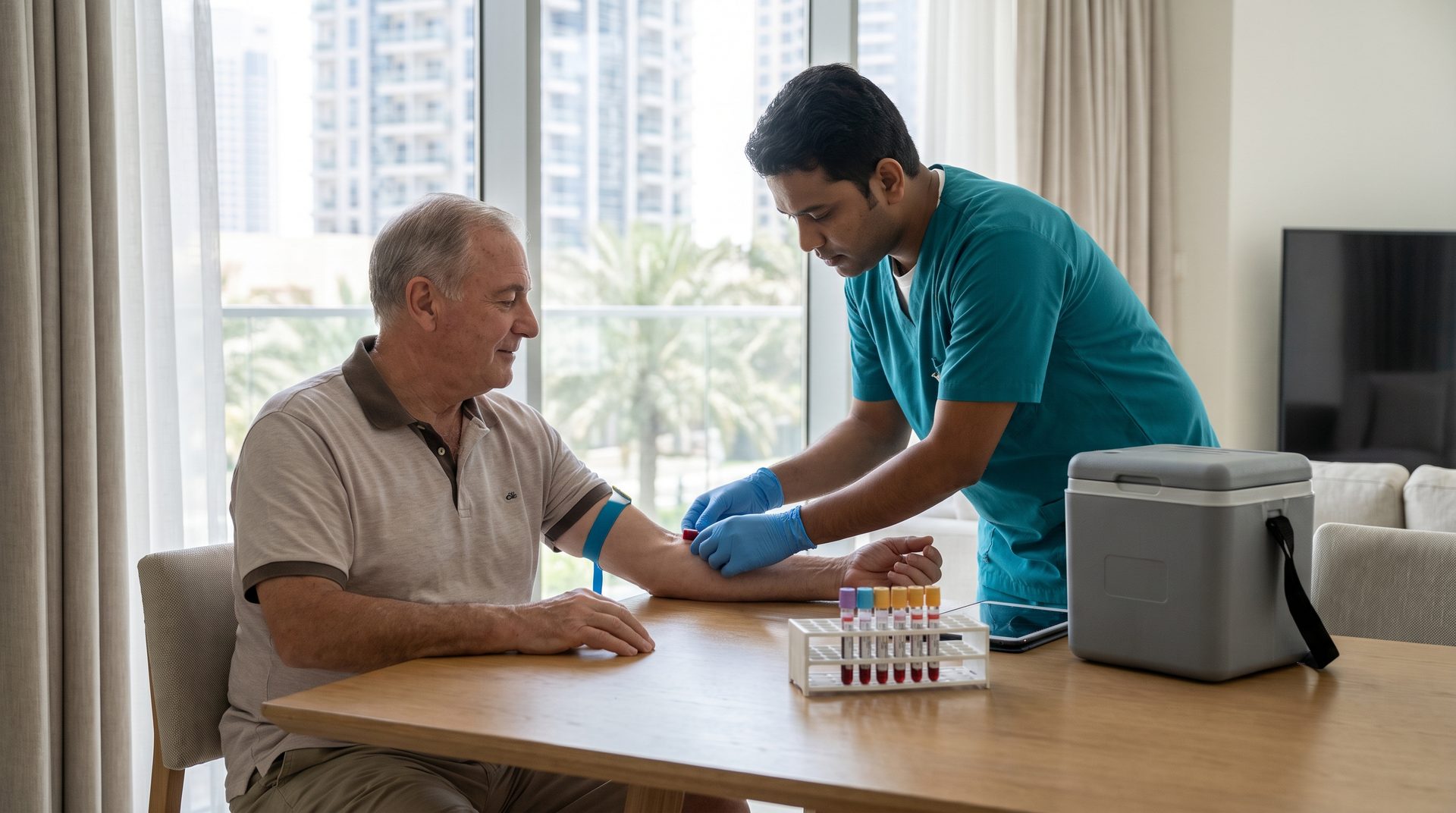
With CareFirst’s blood sample collection at home, a DHA-licensed nurse visits your home or office anywhere in Dubai, collects the sample — including early-morning fasting samples before you’ve had breakfast — and your results are processed by an accredited laboratory. It is an easy way for the whole family to get screened around World Diabetes Day without rearranging work or school schedules.
How often should you be tested?
Most healthy adults benefit from a check of blood sugar every one to three years from around age 35–40, while people with risk factors or previous borderline results are usually advised to test annually. If you have already been diagnosed, your doctor will typically recommend an HbA1c every three to six months to confirm your management plan is working. Your physician can tailor this schedule to you.
Managing diabetes at home in Dubai
For those already living with diabetes, consistent follow-up is what keeps the condition under control — and this is where home healthcare genuinely changes daily life, especially for elderly parents and residents with limited mobility.
Doctor consultations without the waiting room
A doctor at home can review your blood sugar records, examine your feet, skin and circulation, adjust your care plan with your treating physician’s input, and answer the practical questions that often go unasked in a rushed clinic visit. Home consultations are particularly valuable when sugar readings have been fluctuating, after a recent illness, or when an older family member finds travel to appointments exhausting.
Nursing support for daily diabetes care
A home nurse can support families with:
- Blood glucose monitoring and keeping an accurate log for the treating doctor
- Insulin administration and guidance on correct injection technique
- Diabetic wound and foot care, which needs professional attention because wounds heal more slowly when blood sugar is high
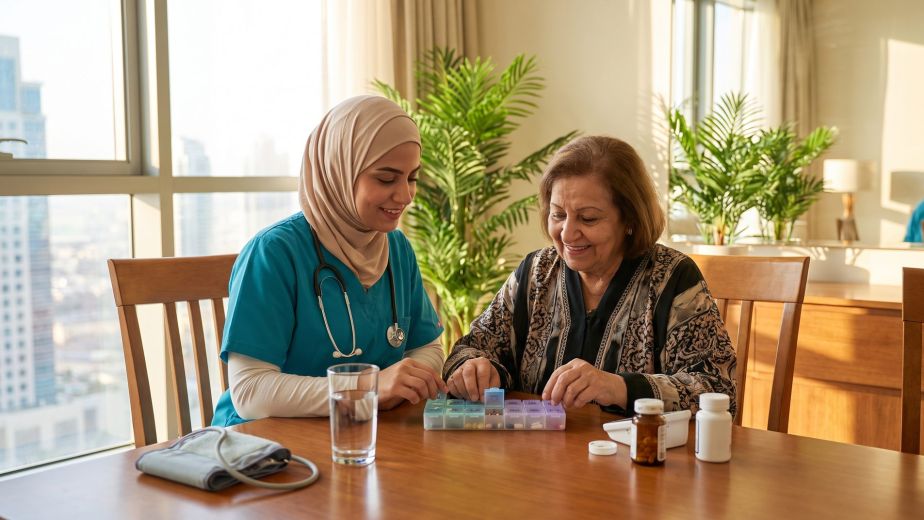
- Medication reminders and day-to-day support for elderly relatives living with multiple conditions
For families caring for an older parent in Dubai, scheduled nursing visits provide reassurance that small problems — a blister on the foot, a string of high readings — are caught before they become emergencies.
Everyday steps that make a real difference
“Early action” is not only about testing — it is about the daily habits that keep blood sugar in a healthy range:
- Use Dubai’s winter well. November to March is perfect for evening walks, cycling tracks and outdoor exercise. Even 30 minutes of brisk walking most days meaningfully improves how your body handles sugar.
- Rebalance the plate. Aim for half vegetables, a quarter lean protein and a quarter whole grains, and swap sugary drinks and karak with sugar for water or unsweetened options.
- Mind your sleep. Poor sleep affects appetite hormones and blood sugar control, so aim for seven or more hours.
- Know your numbers. Weight, waist circumference, blood pressure, cholesterol and HbA1c — tracking them yearly turns vague worry into clear, manageable information.
Frequently asked questions
Can I really get a diabetes test done at home in Dubai?
Yes. A DHA-licensed nurse can visit your home or office to collect blood samples for HbA1c, fasting glucose and related tests. Samples are analysed at an accredited laboratory and results are shared with you promptly, so you can review them with a doctor.
Do I need to fast before a diabetes blood test?
It depends on the test. HbA1c does not require fasting, while a fasting glucose test requires about 8–10 hours without food. Home collection makes fasting tests much easier — the nurse comes to you in the early morning before breakfast.
What is prediabetes, and can it be reversed?
Prediabetes means blood sugar is higher than normal but not yet in the diabetes range. For many people, weight loss, regular activity and dietary changes can bring readings back to normal — which is exactly why early testing is so valuable. Your doctor can guide you on a plan suited to your health profile.
My father has diabetes and lives with us in Dubai. How can home nursing help?
A home nurse can take over the clinical parts of daily care — glucose checks, insulin administration, foot inspections and wound care — while keeping his doctor informed. This reduces the burden on family caregivers and helps catch complications early.
Is a home visit suitable if my sugar readings are suddenly very high?
Very high readings with symptoms such as vomiting, confusion, rapid breathing or drowsiness are an emergency — call 998 or go to the nearest emergency department. For non-emergency concerns, such as readings trending upward over days, a doctor-at-home visit is a convenient way to be assessed quickly.
Take early action this World Diabetes Day
This 14 November, give yourself and your family the simplest gift there is: certainty. Whether you need a screening blood test at home, a doctor’s visit for a parent, or regular nursing support for someone living with diabetes, CareFirst Home Health Care Center has been caring for Dubai families since 2005 with a team of over 300 DHA-licensed professionals.
Call or WhatsApp us on +971 58 947 4302 or book online — our team can usually arrange a home visit anywhere in Dubai within hours, seven days a week.
This article is for general information only and is not a substitute for professional medical advice. Always consult a licensed physician.