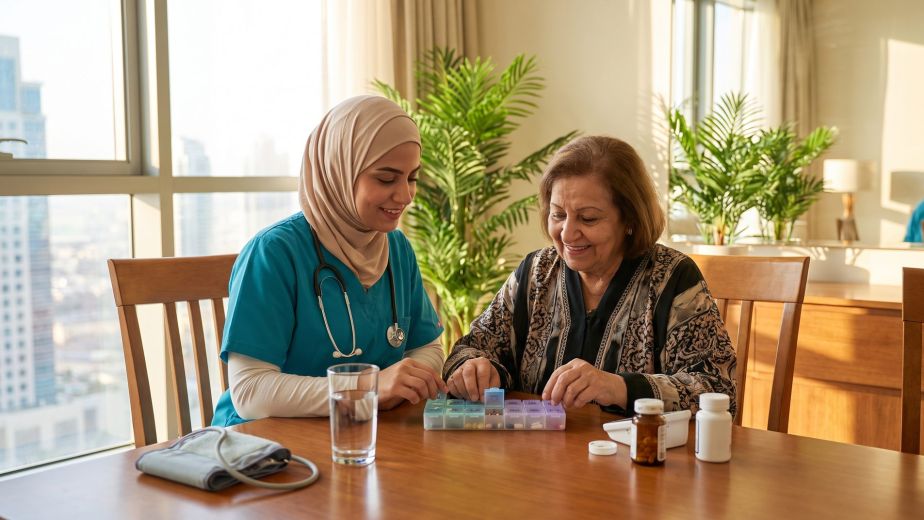
Every winter, Dubai nurseries, schools and family gatherings see the same thing: a child (and then half the household) comes down with vomiting, diarrhoea and stomach cramps. Doctors in the UAE regularly warn that viral gastroenteritis, often called “stomach flu”, becomes more common in the cooler months, and norovirus is one of the usual causes. This guide explains what to expect, how to keep your family hydrated at home, and when a doctor at home visit makes sense.
What Is Stomach Flu (Viral Gastroenteritis)?
Despite the name, stomach flu has nothing to do with influenza. It is an infection of the gut, usually caused by a virus such as norovirus or rotavirus. It spreads easily through contaminated hands, surfaces, food and water, and through close contact with someone who is unwell.
Typical symptoms include:
- Sudden vomiting
- Watery diarrhoea
- Stomach cramps and nausea
- Low-grade fever, headache and body aches
- Tiredness and loss of appetite
Most healthy children and adults improve within a few days with rest and fluids. The main risk is not the virus itself but dehydration, especially in babies, young children, older adults and people with chronic conditions.
Why It Spreads So Fast in Dubai
Dubai families live close together, children share classrooms and play areas, and many of us travel during school breaks and welcome visitors from overseas. Winter also brings more indoor gatherings, family brunches and barbecues, where food sits out for long periods.
- Schools and nurseries: shared toys, toilets and tables help the virus move quickly.
- Travel: children returning from holidays can bring home new bugs.
- Gatherings: one infected guest or one poorly handled dish can affect many people.
- Hot-weather habits in cooler months: food left out and unwashed salad or fruit can still carry germs.
Home Care: How to Manage Mild Cases
1. Replace fluids early and often
Offer small, frequent sips rather than large gulps, which can trigger more vomiting. Oral rehydration solution (ORS), available from UAE pharmacies, is designed to replace both water and salts. Water alone does not replace lost salts. For breastfed babies, continue breastfeeding more often.
A simple routine: after each vomit or loose stool, give a few teaspoons to a few sips of ORS every few minutes, and build up gradually.
2. Bring food back gently
There is no need to starve. Once vomiting settles, offer plain, easy foods such as rice, bananas, toast, plain yoghurt, soup or boiled potatoes. Avoid very fatty, spicy or sugary foods and fizzy drinks for a few days.
3. Rest and keep others safe
- Keep the child home from school or nursery, following your school’s guidance, usually until symptoms have settled.
- Wash hands with soap and water after the toilet and before preparing food. Hand sanitiser is less reliable against norovirus.
- Clean surfaces, toilets and door handles with a household disinfectant, and wash soiled clothes and bedding on a hot cycle.
- Do not prepare food for others while you are unwell and for a couple of days afterwards.
4. Be careful with over-the-counter medicines
Do not give anti-diarrhoea or anti-vomiting medicines to children unless a doctor advises it. Fever medicine should be dosed by weight and age. If in doubt, ask a doctor first.
Warning Signs of Dehydration
Contact a doctor promptly if you notice any of the following:
- Very few wet nappies, or no urine for 6–8 hours in a child
- Dry mouth, no tears when crying, sunken eyes
- Unusual sleepiness, floppiness or irritability
- Dizziness or fainting in older children and adults
- Sunken soft spot (fontanelle) in a baby
- Cold hands and feet, or rapid breathing
When to Call a Doctor Urgently
Seek medical help straight away, or go to the nearest emergency department, if:
- The patient is a baby under 3 months old with vomiting or diarrhoea
- There is blood in the vomit or stool, or green vomit
- The child cannot keep any fluids down for several hours
- There is severe or constant stomach pain, or a swollen, hard tummy
- Fever is high or lasts more than a couple of days
- Symptoms last longer than a few days without improving
How CareFirst Can Help at Home
When a child or elderly relative is vomiting, travelling to a clinic is the last thing anyone wants. CareFirst’s DHA-licensed team can come to your home anywhere in Dubai.
Doctor at home
A doctor at home can examine your child, check for signs of dehydration, look for other causes of stomach upset and explain what to do next, including whether hospital care is needed.
IV hydration when it is needed
If a doctor decides that fluids by mouth are not enough, IV therapy at home may be an option for suitable patients, delivered by a licensed nurse under medical direction. It is not appropriate for everyone, and the doctor will decide after assessment.
Nursing and lab support
For elderly relatives or patients who need monitoring, a nurse at home can help with fluid checks, medication reminders and comfort care. If the doctor wants to check hydration, infection or kidney function, a blood test at home can be arranged without leaving the house.
Who Needs Extra Care?
Some people become dehydrated much faster than others, so it is wise to involve a doctor earlier for them:
- Babies and toddlers, who lose fluid quickly and cannot tell you how they feel
- Older adults, who may feel less thirst and are more likely to take regular medicines that affect hydration
- Pregnant women
- People with diabetes, kidney, heart or other long-term conditions
If someone in these groups has vomiting or diarrhoea for more than a few hours, it is better to get advice early than to wait and see.
Prevention Checklist for Dubai Families
- Teach children to wash hands for at least 20 seconds, especially after the toilet and before meals.
- Wash fruit and vegetables thoroughly, and keep raw and cooked foods separate.
- Do not leave cooked food out for long, especially at gatherings and barbecues.
- Keep sick family members in one bathroom if possible, and disinfect it daily.
- Stay current with routine childhood vaccinations; ask your doctor about rotavirus vaccination for babies.
- Keep ORS sachets at home during winter so you are ready.
Frequently Asked Questions
How long does stomach flu last in children?
Many children recover within a few days, though tiredness and a reduced appetite can last longer. If symptoms are getting worse, or last longer than expected, see a doctor.
Is stomach flu contagious, and for how long?
Yes. It is most contagious while symptoms are active and for a short time afterwards. Keep your child home until symptoms have settled and follow your school’s return guidance.
Can I give my child sports drinks or juice instead of ORS?
Oral rehydration solution is usually preferred because it has the right balance of salts and sugar. Juice and fizzy drinks can make diarrhoea worse. Ask a doctor if you are unsure.
Can a doctor really treat my child at home in Dubai?
A doctor at home can assess hydration, examine your child and advise on care, and can tell you if hospital attention is needed. Serious warning signs should always go to an emergency department.
Is IV hydration safe for children?
It can be appropriate when a doctor judges that a child is significantly dehydrated and cannot drink enough, but it should only be given after medical assessment.
Book a Home Visit
Is your child or a family member struggling with vomiting or diarrhoea? CareFirst’s DHA-licensed doctors and nurses can reach you at home. Call or WhatsApp us on +971 58 947 4302, or contact us online to book.
This article is for general information only and is not a substitute for professional medical advice. Always consult a licensed physician.