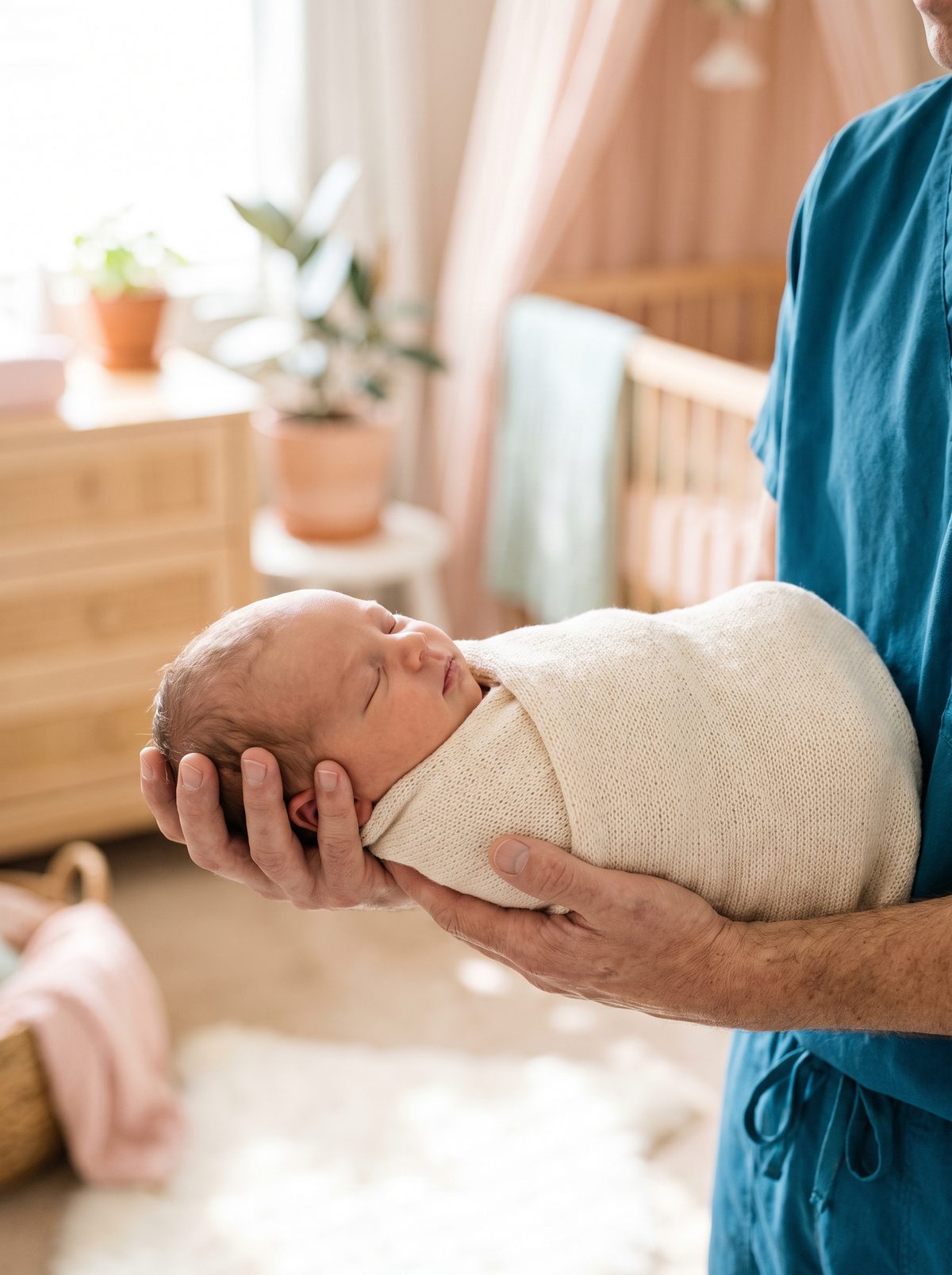
Bringing a newborn home is joyful, and a little overwhelming. In the first two weeks, many Dubai parents notice a yellow tint in their baby’s skin and wonder whether it is normal. This guide explains newborn jaundice in plain language, what you can safely do at home, which warning signs need urgent attention, and how a home visit can support you.
What Is Newborn Jaundice?
Newborn jaundice is a yellowing of the skin and the whites of the eyes. It happens when a natural substance called bilirubin builds up in the blood faster than a baby’s immature liver can clear it. It is very common, and in most healthy full-term babies it is mild and settles on its own.
- It usually becomes visible around day two or three after birth.
- It often starts on the face and may spread down to the chest, belly and legs.
- Mild jaundice commonly improves by around two weeks of age.
Even though it is common, jaundice should always be watched carefully. In some babies bilirubin rises too high and needs medical treatment, which is why monitoring matters.
Why Feeding Matters So Much
Adequate feeding is one of the most important things you can do. Bilirubin leaves the body mainly through stool, so a baby who feeds well and passes regular stools clears it more easily.
Practical feeding tips
- Feed your baby on demand, and wake a very sleepy baby for feeds if advised by your doctor or nurse.
- Keep a simple log of feeds, wet nappies and stools for the first week or two.
- If breastfeeding feels painful or your baby does not latch well, ask for help early rather than waiting.
Checking Your Baby at Home
Dubai homes often have air conditioning and warm artificial light, which can make skin colour hard to judge. Try this gentle check in good natural daylight, near a window:
- Press a finger lightly on your baby’s forehead or nose, then release. Look at the skin colour under the pressed spot.
- Look at the whites of the eyes and the gums.
- Notice whether the yellow colour seems to be spreading or deepening from one day to the next.
This is only a rough guide. It cannot measure bilirubin, and a baby can look only slightly yellow yet still need testing. If you are unsure, ask a professional.
What About Sunlight?
Many families are told to place babies in the sun. Direct sunlight is not recommended as a treatment for jaundice, and Dubai’s strong sun and heat can be harmful to a newborn’s delicate skin and may cause overheating. Do not rely on sun exposure; follow your paediatrician’s advice instead.
Warning Signs: When to Seek Urgent Help
Contact your paediatrician or go to the nearest emergency department promptly if you notice any of the following:
- Yellow skin within the first 24 hours after birth.
- Yellow colour spreading to the legs, palms or soles, or getting deeper.
- Your baby is very sleepy, hard to wake, or feeding poorly.
- Few wet nappies, or pale, chalky stools or dark urine.
- Unusual, high-pitched crying, floppiness, or fever.
- Jaundice lasting more than two weeks in a full-term baby, or more than three weeks in a premature baby.
When in doubt, do not wait. Newborns can change quickly, and early assessment is always the safer choice.
Newborn Screening and Follow-Up Visits
In Dubai, newborns are screened for certain congenital and genetic conditions shortly after birth, and follow-up appointments with your paediatrician are an important part of the first weeks. Keep every scheduled visit and ask your hospital or doctor which checks your baby has already had and which are still due. Requirements can be updated by the health authorities, so always confirm the current details with your paediatrician.
Preparing for Your First Weeks at Home
A little preparation makes the early days calmer. Before or just after you leave the hospital, it helps to organise a few essentials.
- Write down your paediatrician’s number and the nearest emergency department, and keep them somewhere visible.
- Ask for discharge notes and keep your baby’s records, including any screening results and the date of the next check, in one folder.
- Set up a feeding corner with water, snacks, a nursing pillow and a notepad for your feed and nappy log.
- Keep the room comfortably cool. Dubai’s air conditioning is welcome, but avoid blowing cold air directly on your baby, and dress them in light layers.
- Share the load. Let relatives help with meals and chores so you can focus on feeding and rest.
Remember that every baby is different. If something simply feels wrong to you, trust that instinct and ask a professional. Parents are usually the first to notice subtle changes in their baby.
How Home Visits Can Help New Parents
The first weeks after delivery are tiring, and travelling across Dubai traffic with a newborn is not always easy. A qualified team visiting you at home can offer practical reassurance. Our baby care at home service can support parents with:
- Observation of your baby’s general condition, feeding and nappy output.
- Guidance on positioning, burping, bathing and cord care.
- Support and encouragement with feeding routines.
- Advice on when your baby should be seen urgently by a doctor.
If your baby is unwell, our doctor at home service can assess your child in the comfort of your home and advise on next steps, including referral to hospital where needed. If a doctor requests blood tests, our team can arrange blood sample collection at home so you do not need to travel with a newborn.
CareFirst has served Dubai families since 2005, with over 300 DHA-licensed professionals.
Looking After Yourself Too
Recovering mothers need care as well. Rest when you can, drink plenty of fluids, accept help from family, and tell your doctor if you feel unusually low or overwhelmed. If you need nursing support after delivery, our nurse at home service may help.
Frequently Asked Questions
Is newborn jaundice dangerous?
Mild jaundice is common and usually harmless, but high bilirubin levels can be serious. That is why monitoring and prompt medical advice are important.
How long does newborn jaundice last?
In many healthy full-term babies it improves by about two weeks. If it lasts longer, or your baby seems unwell, see a doctor.
Can I treat jaundice with sunlight in Dubai?
No. Direct sunlight is not recommended as a treatment and may expose your baby to heat and skin damage. Follow medical advice.
Can a doctor see my newborn at home?
Yes, a doctor can assess your baby at home and advise whether hospital care or tests are needed. In an emergency, go straight to the nearest hospital or call 998.
Does breastfeeding cause jaundice?
Feeding difficulties can contribute to jaundice, but breastfeeding itself is encouraged. Good support with latching and frequent feeds helps.
Book a Home Visit
If you have questions about your newborn’s colour, feeding or general wellbeing, our team is here to help. Call or WhatsApp us on +971 58 947 4302, or contact us online to arrange a visit at a time that suits your family.
This article is for general information only and is not a substitute for professional medical advice. Always consult a licensed physician.