Dubai enjoys sunshine almost every day of the year, so it surprises many residents to learn that low vitamin D is one of the most common findings on routine blood tests in the UAE. Research on UAE populations has repeatedly shown that a majority of adults tested have vitamin D levels below the recommended range — a pattern doctors sometimes call the “sunshine paradox”. With the cooler months here and many families booking their winter health check-ups, November to February is an ideal time to find out where your levels stand.
In this guide, we explain why vitamin D deficiency is so widespread in Dubai, the signs worth paying attention to, who should consider testing, and how a simple vitamin D blood test at home can give you a clear answer without leaving your living room.
Why Is Vitamin D Deficiency So Common in Sunny Dubai?
Vitamin D is produced in the skin when it is exposed to direct sunlight. In theory, Dubai residents should have no shortage of it. In practice, several everyday realities of life in the UAE work against us:
- An indoor, air-conditioned lifestyle. For much of the year, the heat pushes daily life indoors — home, car, office, mall — leaving very little direct sun exposure, often less than a few minutes a day.
- Sunscreen and sun avoidance. Sensible sun protection also reduces the skin’s vitamin D production, so people who are diligent about SPF can still run low.
- Clothing coverage. Styles of dress that cover most of the skin limit the surface area available for vitamin D synthesis.
- Skin tone. Higher levels of melanin mean the skin needs longer sun exposure to make the same amount of vitamin D, which affects many residents from South Asian, Arab and African backgrounds.
- Diet. Few foods are naturally rich in vitamin D, so diet alone rarely makes up the difference.
Put these together and it becomes clear why studies across the Emirates keep finding low levels — even among young, otherwise healthy adults who feel they spend plenty of time “in the sun”.
Signs and Symptoms of Low Vitamin D
One of the trickiest things about vitamin D deficiency is how quietly it develops. Many people have low levels with no obvious symptoms at all, which is why it is so often discovered only on a blood test. When symptoms do appear, they tend to be vague and easy to blame on a busy Dubai lifestyle:
- Persistent tiredness or low energy that doesn’t improve with rest
- Aching bones, joints or lower back
- Muscle weakness, cramps or general heaviness in the legs
- Low mood or feeling flat, especially during long stretches spent indoors
- Getting coughs, colds and other infections more often than usual
- Slow recovery after exercise or minor injuries
Because these symptoms overlap with so many other conditions — thyroid issues, iron deficiency, poor sleep, stress — the only reliable way to know your vitamin D status is a blood test. Guessing, or taking high-dose supplements “just in case”, is not a safe substitute: vitamin D is fat-soluble, and taking too much for too long can cause problems of its own.
Who Should Consider a Vitamin D Test?
A vitamin D check is worth discussing with a doctor if any of the following apply to you or a family member:
- You work indoors most of the day and rarely get midday sun on bare skin
- You consistently use sunscreen or dress with most of your skin covered
- You have darker skin
- You are pregnant, breastfeeding, or planning a pregnancy
- You are over 60, as the skin becomes less efficient at producing vitamin D with age
- You have osteoporosis, frequent fractures, or a family history of bone problems
- You have a digestive condition that affects nutrient absorption
- You simply feel run-down and haven’t had a health check in over a year
Children and teenagers in Dubai are not exempt. Long school days, screen time and air-conditioned activities mean many children get very little direct sunlight, and growing bones depend heavily on vitamin D and calcium.
How Vitamin D Testing at Home Works
The standard test measures 25-hydroxyvitamin D — written as 25(OH)D on lab reports — which reflects your body’s overall vitamin D stores. It requires only a small blood sample, and no special preparation or fasting is needed for the vitamin D test itself (though if you are combining it with other tests, such as cholesterol or glucose, your doctor may advise fasting).
With CareFirst’s blood sample collection at home, the process is simple:
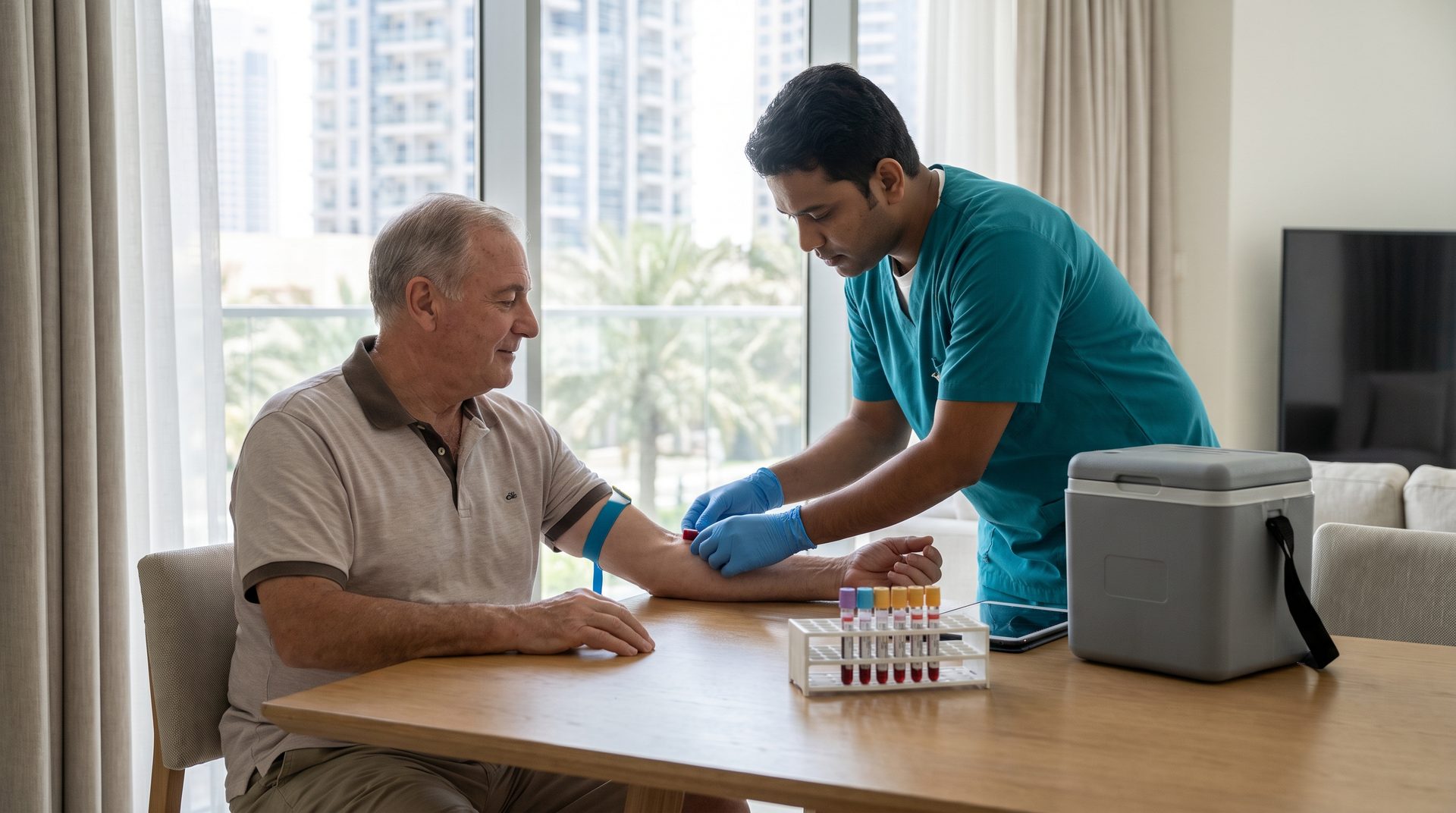
- A DHA-licensed nurse visits your home, office or hotel anywhere in Dubai at a time that suits you — early mornings and evenings included.
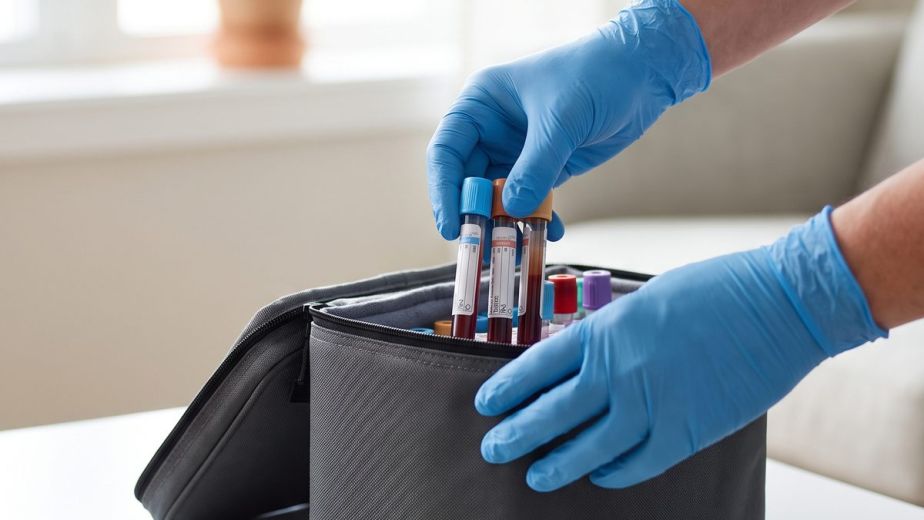
- The sample is collected in a few minutes using sterile, single-use equipment and transported safely to an accredited laboratory.
- Results are typically shared electronically, and you can review them with a doctor without visiting a clinic.
Many families combine the vitamin D test with a broader winter check-up panel — blood count, iron, thyroid, blood sugar and cholesterol — so one short home visit covers everyone’s annual screening.
What Happens If Your Level Is Low?
If your result comes back low, there is good news: vitamin D deficiency is very manageable once it has been identified. A doctor will look at your actual level, your age, weight, diet and medical history, and then recommend a correction plan that usually includes:
- Supplementation at the right dose. The appropriate strength and duration depend on how low your level is — this is exactly why testing first matters, and why a follow-up test after a few months is often advised to confirm your level has recovered.
- Sensible sun exposure. In the Dubai winter, short periods of morning or late-afternoon sunlight on the arms and legs a few times a week are far more pleasant — and practical — than in August.
- Dietary support. Oily fish such as salmon and sardines, egg yolks, and fortified milk or cereals all contribute, even if diet alone is rarely enough.
If you would rather not visit a clinic to discuss your results, a doctor at home in Dubai can review your lab report with you, examine you if needed, and set out a clear plan — all in the comfort of your own home. For patients whose doctor recommends it, CareFirst also offers supervised IV vitamin therapy at home, administered by licensed nurses under medical guidance.
Simple Habits to Keep Your Levels Up This Winter
Dubai’s winter is the easiest season to build vitamin D-friendly habits, because being outdoors is actually enjoyable:
- Take a 15–20 minute morning walk a few times a week — the beach, a park or your community track all work.
- Move workouts outdoors while the weather allows: outdoor gyms, padel, cycling tracks and jogging routes are at their best now.
- Encourage children to play outside after school instead of heading straight to screens.
- Include vitamin D-rich foods in the weekly shop.
- Re-test after any correction course, and consider making vitamin D part of your yearly health check.
Frequently Asked Questions
Can I check my vitamin D level without going to a clinic in Dubai?
Yes. A DHA-licensed nurse can collect the blood sample at your home, office or hotel anywhere in Dubai, and the sample is processed by an accredited laboratory. It takes only a few minutes and requires no special preparation.
Do I need to fast before a vitamin D test?
No fasting is needed for the vitamin D test on its own. If you are combining it with other tests such as blood glucose or a lipid profile, your doctor may ask you to fast for 8–12 hours beforehand.
How often should I test my vitamin D in the UAE?
For most adults, once a year as part of a routine check-up is reasonable. If you have been found deficient and are on a correction plan, your doctor will usually recommend a repeat test after about three months to confirm your level has improved.
Can I just take vitamin D supplements without testing?
It is safer to test first. Without knowing your level, you may take far too little to correct a genuine deficiency — or more than you need for a long period, which carries its own risks. A blood test lets a doctor match the dose to your actual result.
Is vitamin D deficiency common in children in Dubai?
Yes, it can affect children too, especially those who spend most of their time indoors. If your child seems unusually tired, complains of aching legs, or is picking up frequent infections, it is worth discussing a check-up and blood test with a doctor.
Book a Vitamin D Test at Home in Dubai
Since 2005, CareFirst Home Health Care Center has brought DHA-licensed doctors and nurses to homes across Dubai. Whether you need a single vitamin D test, a full family check-up panel, or a doctor’s visit to review your results, we can arrange it at a time that suits you — often on the same day.
Call or WhatsApp us on +971 58 947 4302 or reach us through our contact page to book your home visit today.
This article is for general information only and is not a substitute for professional medical advice. Always consult a licensed physician.